

by Shane M Grizzle | Updated on October 25, 2023
This blog is the third in the ‘Build Bridges‘ mini-series, emphasizing the critical role of managing internal stakeholder engagement to foster a unified customer experience. The quality of your customer experience directly mirrors the organization’s internal cohesion. Therefore, building relationships (i.e., bridges) that facilitate organizational synergies is imperative.
The ‘Build Bridges’ series explores various tools and techniques that enable and enhance stakeholder engagement. In the previous blog post, the focus was on context diagrams. A context diagram visually represents a system and its interactions with internal stakeholders. It depicts the team or department as the core system and illustrates inputs and outputs to and from other teams or departments, which are key internal stakeholder groups. It’s a helpful tool when designing new teams, recovering after a disruptive reorganization, etc.
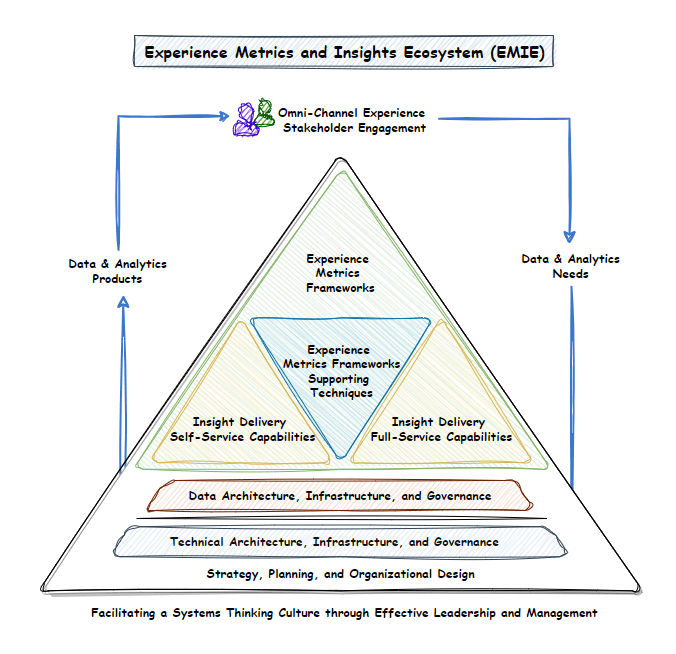
In this blog, the focus shifts to stakeholder mapping, a method that dives deeper into understanding specific stakeholders and their influence beyond the context diagram. Stakeholder mapping is a valuable tool used to refine stakeholder engagement strategy, playing an essential role within the broader framework of the Experience Metrics and Insights Ecosystem (EMIE).
Situation
Let’s explore situations highlighting the importance of investing time in stakeholder mapping. Like context diagrams, stakeholder mapping is valuable when dealing with organizational change. It is equally beneficial when launching a new initiative that requires a fresh examination of stakeholder identification. Consider a scenario where you initiate a large project to develop a new feature within your company website. While your experience in this domain might span several years, assessing your stakeholders and articulating your strategy for managing them is still essential. The stakeholder mapping exercise helps with this assessment. It will serve as a helpful reference for you and your team while also functioning as a communication tool with others involved in the project.
Stakeholder Mapping
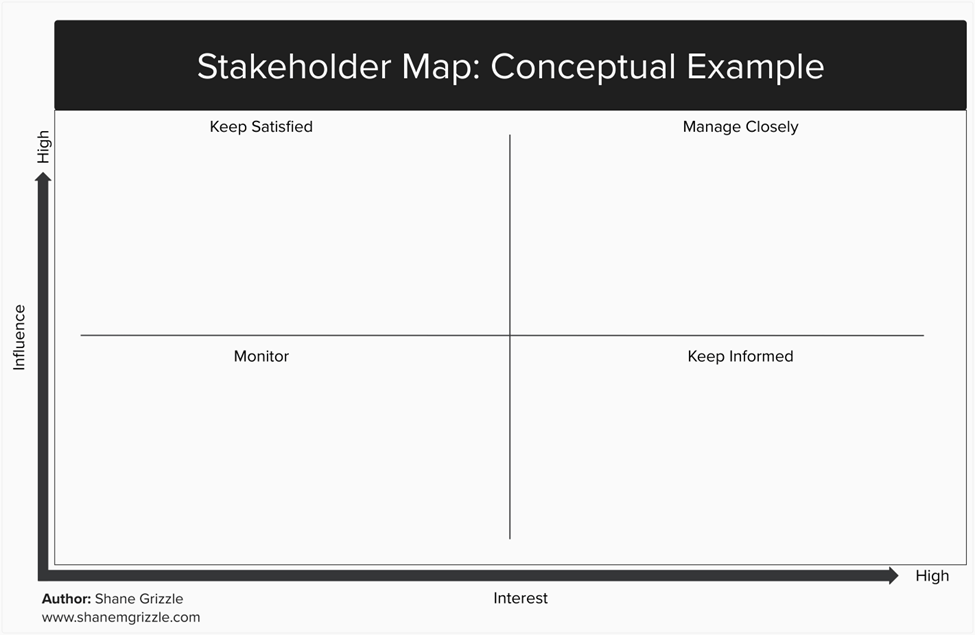
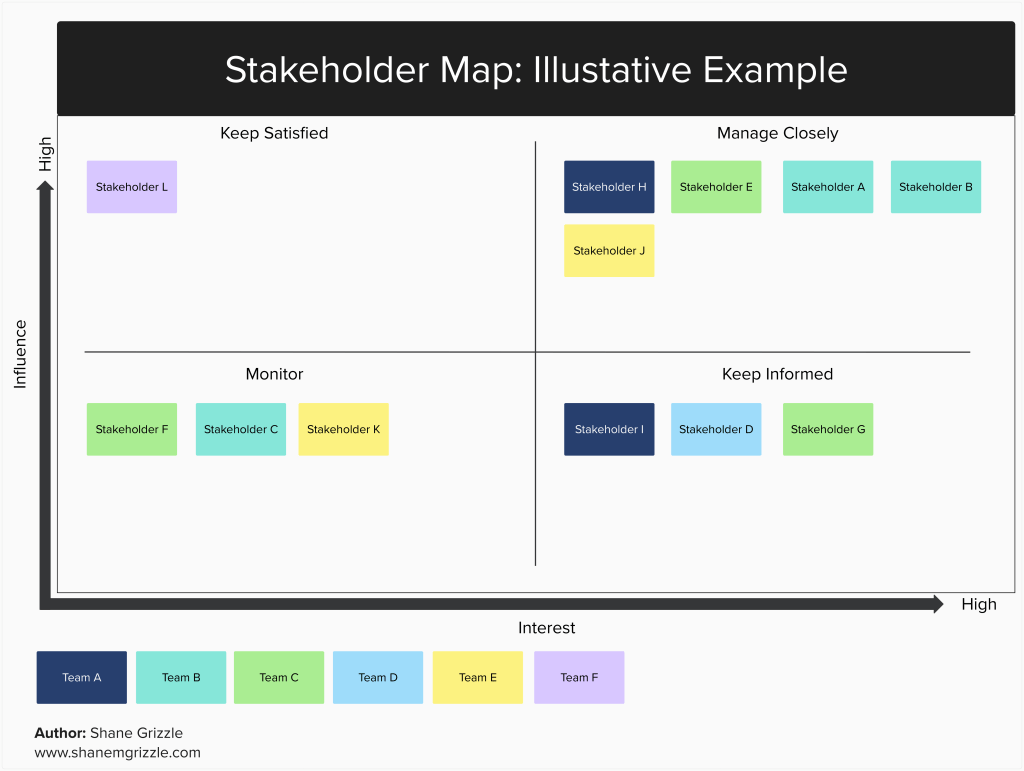
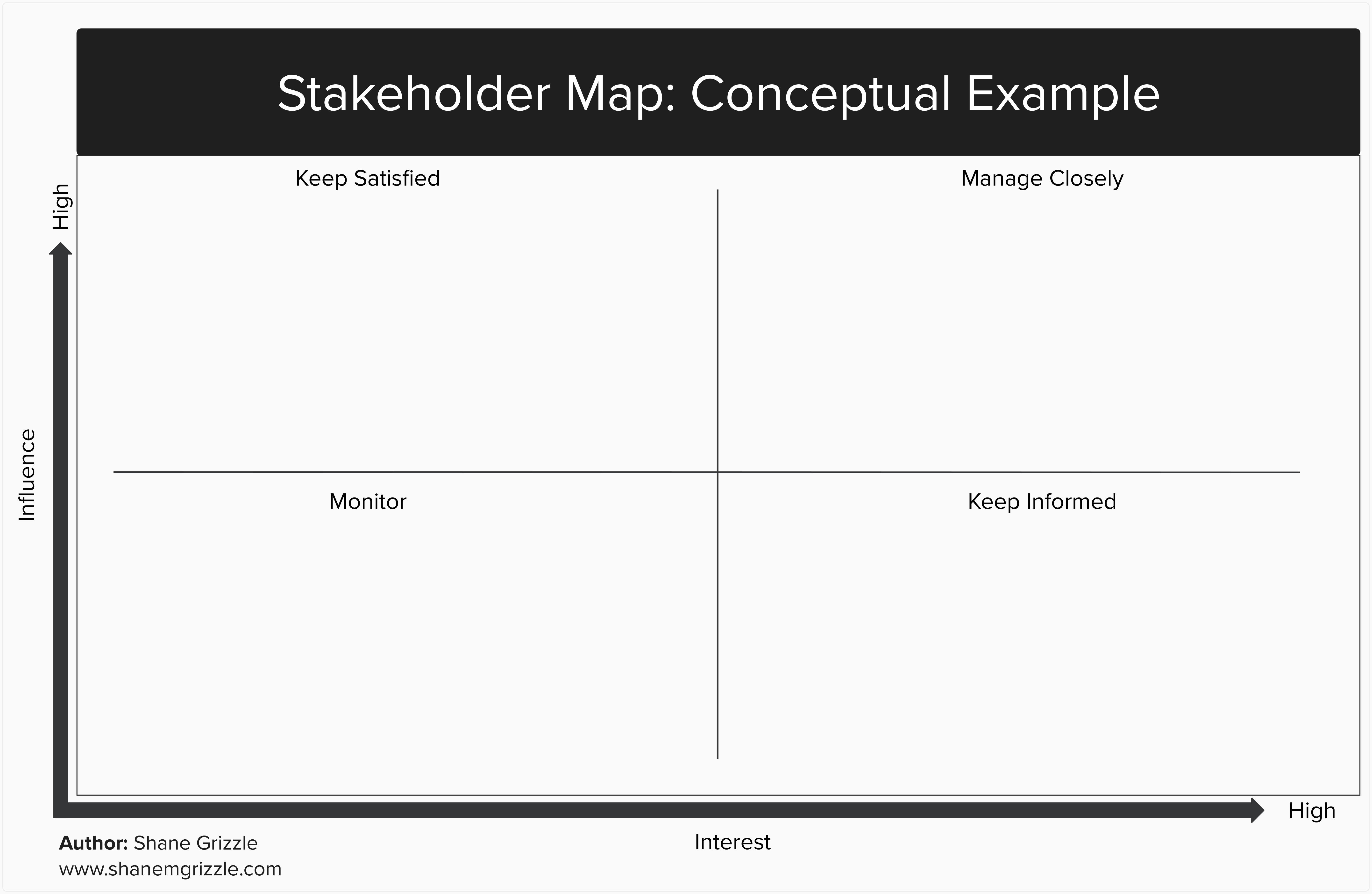
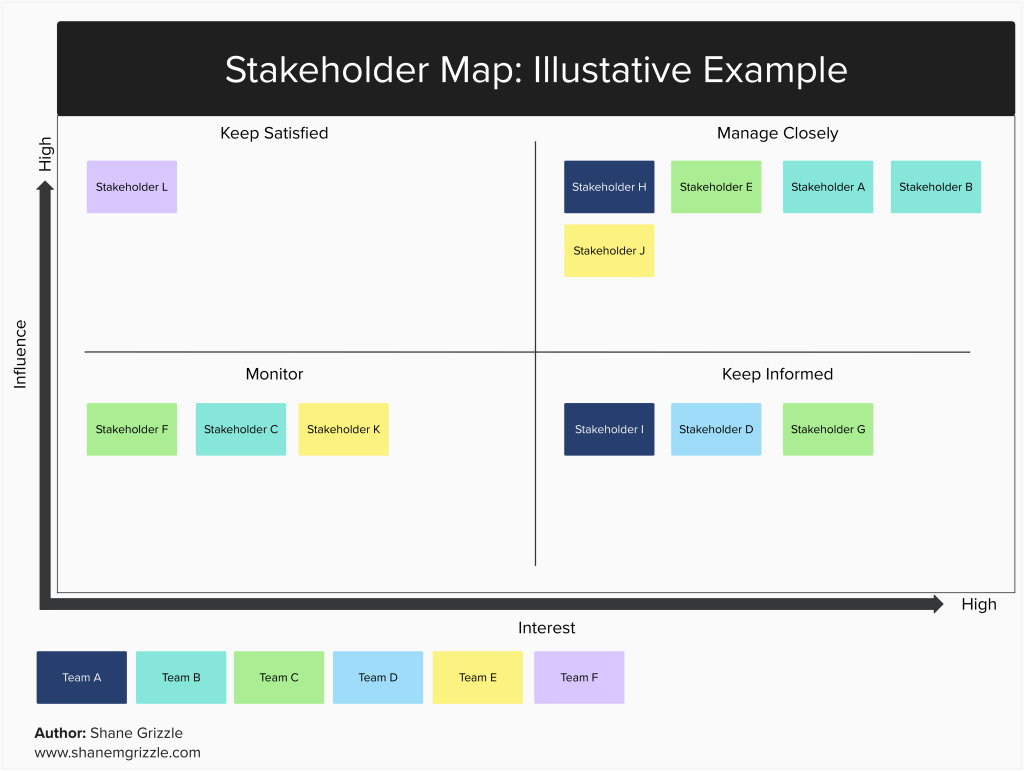
Stakeholder mapping is an exercise used to identify and organize the diverse stakeholders associated with an initiative, such as a project or product. The outcome of this exercise is the creation of a simple visualization that categorizes and prioritizes stakeholders based on factors such as their level of interest and influence – basically, their involvement in the initiative. I’ll walk you through how to complete the Stakeholder Map template below.
Creating a Stakeholder Map
Creating a stakeholder map is simple. You can likely complete one from start to finish in just a few hours depending on the scale of your initiative. High-level guidance related to creating a context diagram is as follows:
Identify Internal Stakeholders: Start by identifying the key stakeholders involved in the project. Depending on the scope of your project, consider those stakeholders that are internal to the company and external to the company.
- Internal stakeholders are individuals within the company, differentiated between those actively involved in shaping and implementing the deliverable and those in indirect or supportive roles. To illustrate, imagine overseeing the development of a suite of dashboards for the Marketing department. Individuals directly contributing to the construction of the dashboards, such as the data engineering team, play a pivotal role in shaping and implementing the deliverable, and they are considered partners in this endeavor. On the other hand, Marketing initiated the need for the dashboard suite and will primarily use the final product. While Marketing defines requirements and funds the effort, they serve in a supporting role. Therefore, Marketing is an internal customer.
- External stakeholders refer to individuals and entities outside of the company that have the potential to impact or be impacted by the project or product. They encompass regulatory bodies, prospective or current customers of the company, and others, particularly in efforts geared toward introducing a product to the market. It’s important to note that external stakeholders also play a role in projects focused on internal products. For example, consider a scenario involving the utilization of a Software as a Service (SaaS) solution. In this scenario, individual consultants associated with the SaaS company provide consultative support throughout the entire project lifecycle. Despite being external to the company, these consultants collaborate with you to generate the deliverable for your internal customer.
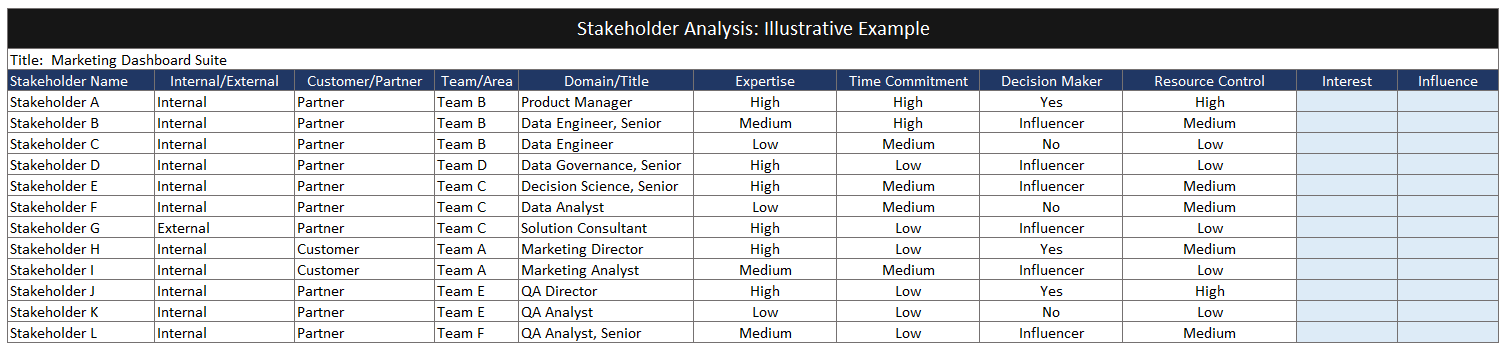
Establish Categories: In this step, move beyond the broad categorization of internal and external stakeholders to establish logical groupings based on shared interests and functions. For instance, your project may involve multiple individuals engaged in quality administration (QA). Although they may report to different managers, their interests align with the QA function. Therefore, categorize these individuals based on their domain or title in addition to the team they might represent.
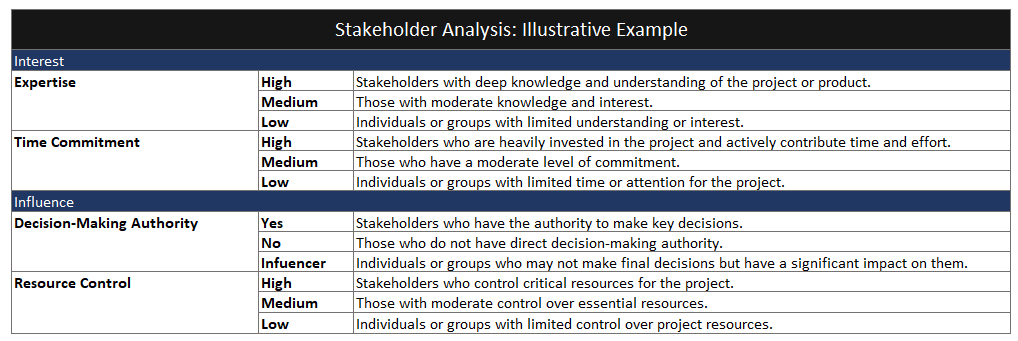
Consider other categories such as Expertise, Time Commitment, Decision-Making Authority, and Resources Control. These groupings will serve as a foundation for assessing each stakeholder’s level of interest and influence. For your specific initiative, explore additional categories that provide insights into the level of influence and interest among stakeholders. Tailoring the categories to your project’s unique needs will enhance your stakeholder analysis’s accuracy, which is the next step. The following includes an example based on the categories mentioned previously.
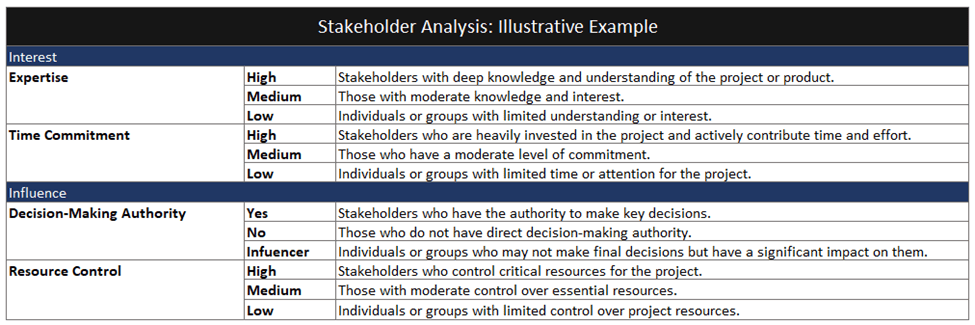
Assess Categories: Based on the categories you’ve defined, assess each identified stakeholder. Keep this assessment simple – do not over analyze the categories – I cannot stress this enough. The following includes an example based on the categories mentioned previously.
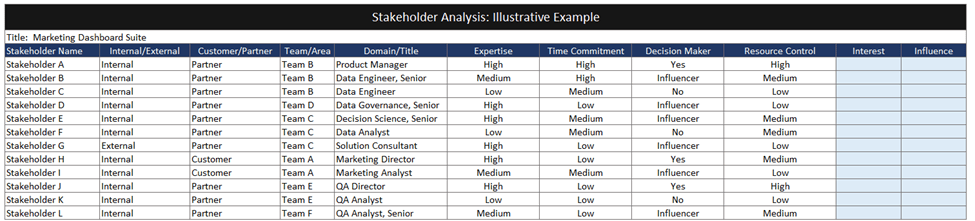
Based on the categories you’ve assessed, determine each stakeholder’s level of Influence and Interest. You may choose a simplified binary rating, distinguishing between High and Low, or use a more detailed scale like High, Medium, Low, or High, Medium-High, Medium-Low, and Low. Tailor your approach to best suit the nuances of your effort, ensuring that you balance thorough analysis and practicality. Detailed rankings can provide granularity; however, avoid overanalyzing, and ensure that the stakeholder mapping task remains focused. Reference the following raking example:
- High Interest are stakeholders with a significant interest in the project actively engaged and closely monitoring progress.
- High Influence are stakeholders who substantially impact decision-making and can significantly shape the project’s direction.
- Low Interest are stakeholders with minimal Interest in the project, not closely engaged or significantly affected by its outcomes.
- Low Influence are stakeholders with limited Influence on decisions and may not significantly impact the project’s course.
This simplified approach streamlines the evaluation process, making it more accessible while providing clear distinctions between stakeholders based on their levels of Interest and Influence. Adapt this framework as needed to align with the specific dynamics of your project. The following includes the final stakeholder assessment:
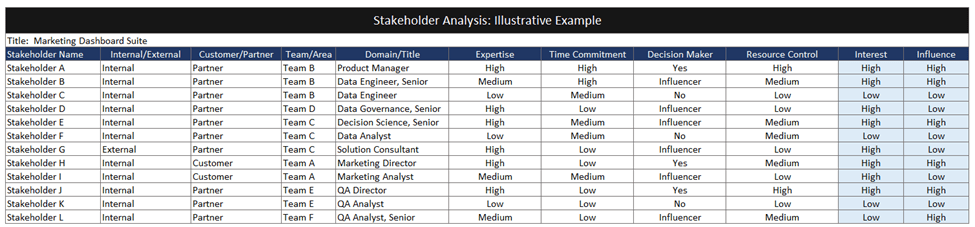
Finalize Stakeholder Map: Finally, the most straightforward step involves translating the results of your analysis into the Stakeholder Map visualization. This visual representation serves as a reference to share with various stakeholders, including your manager, as an alternative to the detailed tabular analysis worksheet. Please review the visualization below for an illustrative example of a completed Stakeholder Map, which corresponds to the stakeholder assessment discussed earlier.
Final Thoughts – Operational Efficiencies
Similar to context diagrams, a stakeholder map serves as a foundational step in establishing and nurturing stakeholder relationships. It serves as your strategy for managing stakeholders, laying the groundwork for the utilization of additional tools and techniques to enhance stakeholder engagement. For instance, a stakeholder map can help shape your communication plan and aid in the creation of a RACI Matrix (Responsible, Accountable, Consulted, Informed), contributing to a more effective and organized stakeholder management approach.
Stay tuned for more content within the ‘Build Bridges’ mini-series that will address these topics. In the meantime, please share techniques you’ve used to improve stakeholder engagement. Each organization differs, and I am interested in your perspective. You can share your experience within the Comments section.
 Shane M Grizzle

Leave a comment