

by Shane M Grizzle | Updated on August 18, 2023
As previously covered in the blog, The Hip-Pocket Guide: First 30 Days for New Team Leaders, a new team leader’s journey parallels running a business within a large organization. This transformation is about more than just delegation and higher pay; it’s a passionate commitment to serve as a force multiplier, empowering others. New leaders in large organizations face challenges such as unclear expectations, inadequate support, and navigating ambiguity. This initial period is critical for building relationships, understanding the operating environment, and aligning the team with broader organizational objectives.
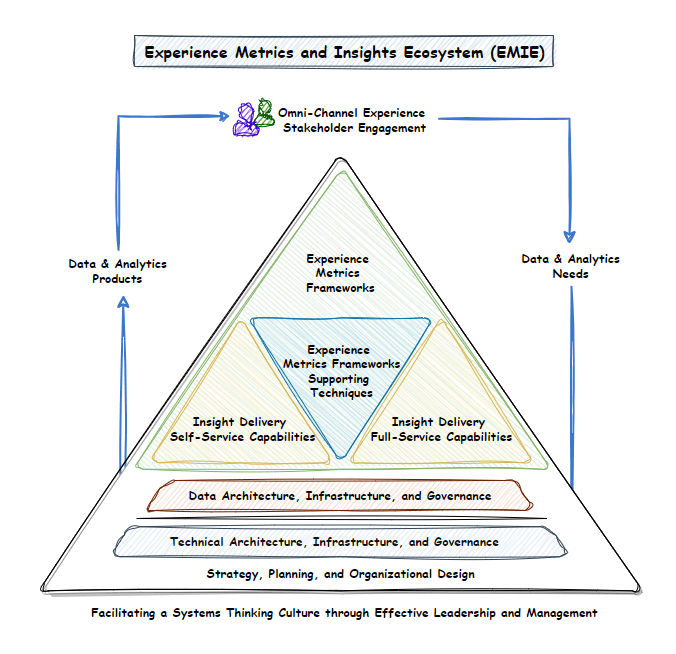
This introduction is a segue to the next phase, 30 to 60 days, reinforcing the importance of strong leadership within the Experience Metrics and Insights Ecosystem (EMIE). This phase builds upon the foundation set in the first 30 days, expanding on the hip-pocket guide series and providing insights for the next stage of the new team leader journey. The overarching message is that the team’s success starts with the new team leader, who must remain flexible and agile while navigating the unique challenges of their role in a large organization. However, between 30 to 60 days, the new team leader should start building structure.
Team leaders are the backbone of large organizations, especially in the complex ecosystem that delivers connected customer experiences. For this reason, I am investing time to cover some topics that will help new team leaders. However, if you are a seasoned leader, please continue engaging with this content. Share your viewpoints in the comments section, subscribe, and share this blog with those aspiring leaders in your network.
Learn more about the EMIE framework within my About Section and the blog, An Integrated Approach: Experience Metrics and Insights Ecosystem.
Challenge
The challenge and symptoms previously covered in The Hip-Pocket Guide: First 30 Days for New Team Leaders are listed here for easy reference. New team leaders in large organizations face substantial challenges as they transition from an individual contributor role. Despite the indispensability of effective leadership, these aspiring leaders often do not have a comprehensive playbook to kickstart their success to help navigate ambiguity and complexities of team-level leadership.
Symptoms
- Unclear expectations hinder new leaders’ ability to grasp their roles, responsibilities, and appropriate delegation moments, resulting in uncertainty.
- Inadequate support and guidance result in new leaders feeling unprepared without a plan to navigate ambiguity within large organizations.
- Difficulty navigating ambiguity is overwhelming for new leaders, who may need help establishing a clear direction for their teams.
- Misalignment across team members regarding the overall purpose and objectives, leading to different priorities and conflicting efforts.
- Time management challenges impact new team leaders as they attempt to balance immediate demands and establish team-level strategic direction.
- Stress disrupts team leaders due to uncertainty and the need to prove themselves, which inadvertently impacts their work-life harmony.
While these challenges are also likely symptoms of poor management above the team-level leader, they happen frequently in large companies. In this scenario, as a new team-level leader, you can play the victim or lead – it is your choice, and hopefully it is obvious.
Solution Consideration – The Hip-Pocket Guide (First 30 to 60 Days)
Three previous blog articles, Fostering Success: Improving Teams through Team Charters, Elevator Pitches: Team Vision, Purpose, and Value Proposition Statements, and The Hip-Pocket Guide: First 30 Days for New Team Leaders set the stage for this topic. The information in those articles is particularly relevant to individuals who have recently assumed leadership roles or are embarking on leading a new team, especially entering within the initial 30 to 60 days.
During this phase, as a leader, it’s crucial to focus on understanding stakeholder needs, solidifying familiarity with your product or service, internalizing your team’s purpose, and forming team-centered objectives. Furthermore, this period calls for your active engagement in making decisions related to prioritizing tasks, spanning both ongoing initiatives and those on the horizon. Your dedication to building trust, delivering valuable coaching, and extending mentorship to your team is vital and should build momentum during this time.
Your SMART Goal: As a new team leader, you must set clear goals for yourself. Let’s start with an overarching SMART Goal (i.e., Specific, Measurable, Achievable, Relevant, and Time-Bound). You will be successful in 60 days if you achieve the following:
- Within 60 days of stepping into the team leadership role, create a comprehensive team charter, outlining key objectives, roles, and operational processes. Concurrently, establish and refine the team’s vision, purpose, and value statements to ensure alignment with stakeholder needs and a clear connection to your product and services. These outputs will be crucial navigational tools, fostering team success and facilitating collaborative efforts. The presentation of these documents to your manager will underscore their positive influence on the team’s cohesiveness and strategic orientation, further honing insights gathered during your first 30 days.
Throughout your 30 to 60-day journey, I recommend considering the following areas to shape your efforts:
Understanding Your Stakeholders: This topic is recurring through the previous blogs, which is intentional because it’s critical for success. During your first 30 to 60 days as a new team leader, dedicate time to understanding your stakeholders. Engage in open conversations, actively listen to their needs and concerns, and gather insights to inform your team’s direction. Utilize tools like stakeholder mapping to plot your relationship and strategies on alignment and engagement. Within 60 days, you should have a solid understanding of your stakeholders and critical problems you can start to solve.
Streamlining Your Prioritization Process: During the initial 30 to 60 days, fine-tune your prioritization approach. As a leader, define your prioritization method and expectations from your team. I’ve relied on the Eisenhower Matrix to prioritize my tasks effectively. Yet, various techniques exist, like RICE (i.e., reach, impact, confidence, and effort), Weighted Scoring, Kanban, and more. As a leader, it’s essential to establish how you and your team prioritize tasks. Doing so ensures focus on impactful activities and prevents wasted effort on less critical activities.
Enhancing Your Coaching/Mentorship Approach: Elevate your coaching and mentorship strategies as a top priority during this period. Establish regular one-on-one meetings to provide and solidify constructive feedback loops. By proactively dedicating time to your team’s growth and development, you’ll cultivate a positive culture, elevate team morale, and lay the groundwork for solid team performance.
Remember, you now function as a force multiplier. Take the initiative to understand the unique needs of each team member. For instance, a junior team member might benefit from increased engagement, which can be facilitated by leveraging senior team members for assistance. This approach inadvertently enriches the experience of senior team members in coaching while addressing the specific needs of junior members. A tailored approach to coaching/mentoring can enhance team dynamics and overall productivity.
Refining Team Deliverables: Pay attention to the quality and effectiveness of your team’s current deliverables. Implement tools like peer reviews, project templates, and progress trackers to ensure consistency and alignment with stakeholder expectations. You can easily delegate this task to a senior team member to build their experience and trust. Refining your deliverables reinforces the team’s commitment to excellence and your impact on outcomes.
Final Thoughts – Operational Efficiencies
Strong and adaptable team leadership is necessary as we unpack the Experience Metrics and Insights Ecosystem (EMIE). Remember, team leaders form the backbone of large organizations, especially in the intricate landscape of interconnected customer experiences.
This blog underscores the importance of understanding stakeholders, refining prioritization methods, enhancing coaching and mentorship strategies, and optimizing team deliverables. It also suggests establishing a comprehensive team charter alongside vision, value, and purpose statements, building upon previous blogs. These artifacts serve as navigational tools, steering your team toward success while strengthening insights gathered during the first 30 days.
Stay tuned for upcoming blogs that expand on the hip-pocket guide, exploring timeframes beyond 60 days. And remember, operational efficiencies are the key to unlocking success, and it all starts with you – the new team leader.
 Shane M Grizzle
Leave a comment